

Megatrends are trends that have an effect on a global scale and often are identified with global threats. It is my deep belief that “water flow circularity” will become the next global megatrend.
Water flow circularity represents an onsite, decentralized, or source point use of technology, often referred to as a closed-loop, recycling process.
Megatrends have historically revealed a significant shift in environmental, economic, and social conditions that shift policy and will play out over the coming decade(s).
Politically, no matter the nation or municipality, the global water supply risks have not reached the point where a major policy shift has occurred. The real water threat is coming, and the water flow circularity trend is the best solution.
Earth's Water Flow
The flow of water is a vital resource for all of life, for human life, and for our planet.

Our planet Earth is known as the “Blue Planet”, being the only planet in our universe covered by water, and has a natural resiliency called Mother Nature.
Our water cycle and our ocean health impact planetary and human health; yet society’s hubris allows mankind to pollute our ocean as a “liquid landfill” with liquid and solid waste, killing our ecosystem and contaminating our freshwater.
Our sources of drinking water – being surface water or groundwater, are now contaminated with sewage, industrial or agricultural chemicals, micro-plastics, and forever chemicals.
Unlike the industrial revolution, urbanization, or now artificial intelligence, none of these megatrends will compare to a possible water risk future that could have impacts across all societies, industries, and economies.
Water Flow Circularity Trend
Water is one of the most endangered natural resources on the planet, and its scarcity is now becoming mankind’s biggest environmental challenge.
Every city, county, and state is facing increasing water demand, supply risks, and quality issues, jeopardizing the balance between economic growth and sustainable water resource use.
Moreover, groundwater depletion and water security concerns are impacting local economies in areas where water demand exceeds water availability.
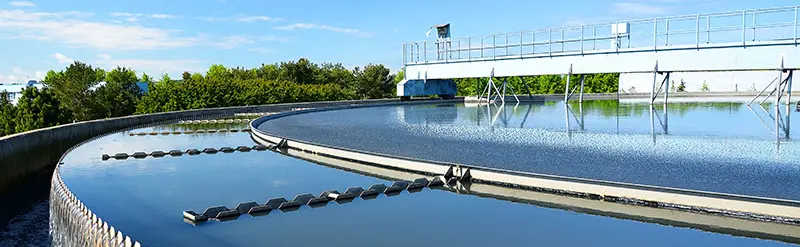
Most of all, with centralized water systems the increased treatment processes or costly requirements to remove nutrients and emerging contaminants from effluent discharged to surface water sources, is driving water reuse as an alternate water supply. Cities are rushing to find innovative solutions to decrease water demand and manage its availability.
American cities and states are beginning to use their financial and regulatory capacity to kick-start a circular economy and the wide adoption of water flow reuse.
Water Flow Circularity & Sustainability
The circularity of water has been considered a key facilitator to increasing sustainability in cities by preventing contamination, reducing pressures on the environment, enhancing supply, and decreasing the normal treatment costs common with large, centralized water networks.
The bottom line, many cities, counties, and states are running out of options, and they are realizing that water reuse is much cheaper than the alternatives. The water flow trend will continue to grow with the help of technology and new building code incentives.
The team at FLOW has a passion for water flow reuse, and our purpose is to shift our thinking about water circularity (www.flowwaterenergy.com)